Business Broker London: How to Choose the Right Adviser
Also available in:Italiano

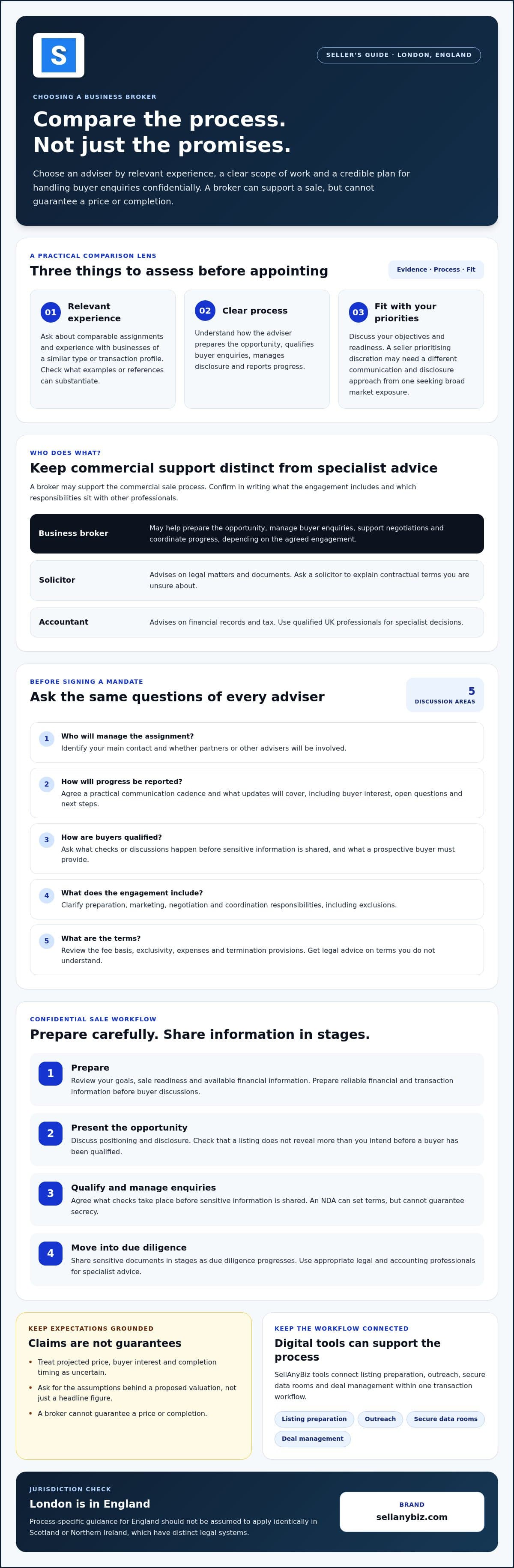
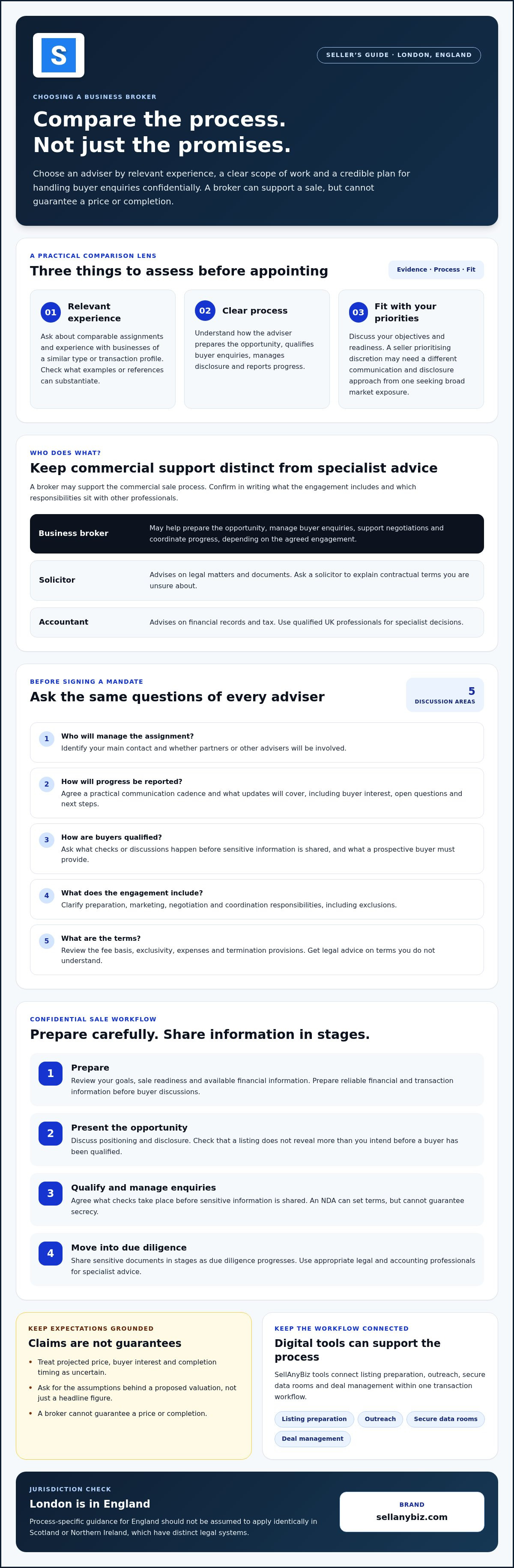
For business owners selling in London, England, the right business broker is one with relevant sector experience, a clear scope of work and a credible plan for handling buyer enquiries confidentially. Compare the adviser’s process and evidence of experience before signing a mandate. A broker can support a sale, but cannot guarantee a price or completion.
Choosing an adviser is only one part of preparing for a sale. You’ll also need to understand what support the engagement includes, how sensitive information will be managed and which decisions require a solicitor or accountant. These details help you assess whether a broker fits your objectives and readiness.
This guide sets out practical criteria for comparing a business broker London sellers may consider. It explains how a confidential sale can move from preparation to due diligence and how connected digital tools can support the workflow while leaving judgement and consequential decisions with people.
Key Takeaways
- Compare a business broker London sellers are considering by sector experience, transaction track record and the specific support included in the engagement.
- Ask how buyer enquiries are qualified and how confidential information is shared. An NDA can set terms, but cannot guarantee secrecy.
- Prepare reliable financial and transaction information before buyer discussions, then share sensitive documents in stages as due diligence progresses.
- SellAnyBiz tools connect listing preparation, outreach, secure data rooms and deal management within one transaction workflow.
Table of Contents
What a business broker in London does during a sale
A business broker is an intermediary who supports the commercial process of selling a business. A business broker London sellers engage may help prepare the opportunity, manage buyer enquiries, support negotiations and coordinate progress, depending on the agreed engagement.
A broker manages the commercial sale process; a solicitor advises on legal matters and documents, while an accountant advises on financial records and tax. A broker may help present information clearly and keep discussions moving, but the seller should confirm in writing what is and is not included. For a neutral overview of what business brokers do, see Wikipedia.
When should a London owner consider engaging a broker?
Broker support may be useful when an owner is assessing sale readiness, expects a complex transaction, needs to limit disclosure or wants help reaching suitable buyers. For example, an owner concerned about staff learning of a potential sale can ask how enquiries are handled, what buyer checks take place and what information is shared at each stage.
You don’t need to appoint an adviser before assessing readiness. Start by reviewing your goals, available financial information and likely preparation needs. Then compare brokers’ experience with similar businesses, proposed scope and approach to buyer qualification. Ask how the adviser will keep you informed and who will handle routine questions as well as significant decisions.
What a broker does not replace
Brokerage is commercial support, not a substitute for specialist advice. A broker may help coordinate information and discussions, but shouldn’t be treated as the seller’s solicitor or accountant. Ask qualified UK professionals to advise on legal documents, tax treatment, accounts and other specialist decisions.
London is in England. Scotland and Northern Ireland have distinct legal systems, so don’t assume process-specific guidance applies identically across the UK. Before appointing a broker, clarify responsibilities, communication arrangements and confidentiality measures in the engagement terms.
How to choose a business broker in London: a seller’s checklist
Choose a business broker London sellers can assess by evidence, process and fit, not by confident promises. Relevant sector experience matters, but so does a clear mandate: what the broker will handle, how buyer enquiries will be qualified and how confidentiality will be managed.
Ask for examples of comparable assignments and clarify what can be substantiated. A broker’s marketing claims are not proof of results. Before appointing an adviser, consider your objectives, the preparation the business may need and the questions a buyer is likely to ask. Request clear explanations of any proposed valuation and the assumptions behind it, rather than relying on a headline figure alone.
Questions to ask before signing a broker mandate
- Who will manage the assignment? Ask who your main contact is and whether partners or other advisers will be involved.
- How will progress be reported? Agree a practical communication cadence and what updates will cover, such as buyer interest, open questions and next steps.
- How are buyers qualified? Ask what checks or discussions take place before sensitive information is shared, and what information a prospective buyer must provide.
- What does the mandate include? Clarify preparation, marketing, negotiations and coordination, including any exclusions and who is responsible for each task.
- What are the terms? Review the fee basis, exclusivity, expenses and termination provisions. Ask a solicitor to explain contractual terms you’re unsure about.
How to assess fit without relying on promises
Compare advisers against the same criteria. Look for a documented process and relevant experience with businesses of a similar type or transaction profile. Ask for references or examples where available, then check what can be independently substantiated. Treat projected price, buyer interest and completion timing as uncertain, not guaranteed.
Fit also depends on your priorities. An owner seeking discretion may need a different communication and disclosure approach from one prioritising broad market exposure. Confirm that the broker understands your objectives and can explain how the proposed process addresses them. Ask what the broker will do if initial buyer interest is limited, or if a buyer’s offer depends on further investigation.
Before appointing anyone, review how a confidential business listing presents an opportunity to prospective buyers. Use it as a prompt to discuss positioning and disclosure, not as evidence of a likely sale outcome. Consider whether the description reveals more than you intend before a buyer has been qualified.
How a confidential London business sale moves from preparation to diligence
A confidential sale typically progresses through preparation, controlled marketing, qualified buyer discussions, offer review and due diligence. Agree who manages each hand-off and what information can be shared at each stage. An NDA can set confidentiality obligations, but it cannot guarantee secrecy.
What to prepare before confidential buyer discussions
Organise financial records, operational information and relevant company documents. Check that figures reconcile, note any gaps and distinguish confirmed information from seller-provided claims. A clear record of assumptions helps avoid confusion when buyers ask how figures were prepared. The records needed will depend on the business and transaction, so confirm the appropriate scope with your accountant and solicitor.
When considering value, gather the information used to explain the business’s financial performance, operations and assets, and be ready to discuss the assumptions behind any estimate. Use London business valuation guidance for context, not as a substitute for professional advice. Any valuation should be considered alongside its inputs and limitations, rather than treated as a guaranteed sale price.
How to manage buyer information and due diligence
As discussions progress, share documents only with authorised people and at the appropriate stage. A permission-controlled data room can help organise access, questions, approvals and follow-ups. Agree with your advisers which documents are appropriate to share, and restrict sensitive material until disclosure is approved.
Record what has been shared, who has access and which responses have been approved. Keep a list of open diligence questions, the person responsible for each answer and the next action. This gives the seller and advisers a clearer account of outstanding points and helps keep follow-up work organised.
How SellAnyBiz supports London business-sale workflows
SellAnyBiz.com is an AI-powered business transaction platform that connects listing preparation with transaction activity in a shared workspace. For a London seller, this can provide a place to organise work alongside a broker’s advice, rather than treating the sale as a listing alone.
Listing Builder and AI Builder support the preparation of listing content, valuations and transaction documents. AI Smart Search helps users explore opportunities, while AI Outreach supports buyer outreach. Secure Data Rooms and Deal Management can support later stages with controlled document access, tasks, questions and activity history. AI can assist with preparation, but users review and approve consequential actions. The platform doesn’t replace a broker’s judgement or qualified legal, tax and accounting advice.
Where digital tools support broker judgement
Deal Management can help make ownership of tasks and outstanding actions visible. A seller and adviser can use stages, checklists, documents, Q&A and activity history to keep work organised and see what needs attention next. Role-based workspaces and collaboration tools can also help participants work together with access suited to their role.
That visibility supports coordination, not decision-making. Tools don’t negotiate terms or determine whether an offer fits the seller’s objectives. Confirm how the workspace will be used, who can access it and how it complements the broker’s agreed role.
Choose the next step for your sale
The platform may suit owners who want listing preparation and deal activity connected in one workflow. Its fit depends on the support you need and the process you plan to follow. SellAnyBiz brokerage services are partner-supported, so confirm the current scope available before relying on a particular service.
SellAnyBiz’s market focus includes Dubai, Abu Dhabi, Sharjah, Ajman, London, Manchester, Birmingham, Leeds, Liverpool, Glasgow, Edinburgh, New York, Los Angeles, Chicago, Miami, Dallas, Houston, Milan, Rome, Turin, Naples and Bologna. For owners considering buyers across markets, clarify how the listing and disclosure process will account for the intended audience.
Review confidential business listings to assess how opportunities are presented. Use that review to identify what information you have ready and what you need to clarify next.
Assess your readiness before choosing the next step
Choosing an adviser is one decision. Deciding what you want from a potential sale is another. Set out your priorities, the information you can provide and the questions you still need answered before committing to a process.
SellAnyBiz connects listing preparation, outreach, documents, data rooms and deal management. AI supports preparation, with consequential actions reviewed and approved by users. Founder and CEO Tahir Javed Kashif brings 15+ years of entrepreneurial and transaction experience.
A sale may or may not be the right move now. Start by identifying what is ready and where you need more clarity, then choose a next step that fits your position.
Explore confidential business listings and consider your options without assuming a particular sale outcome.
Frequently Asked Questions
Is a business broker in London worth appointing?
It depends on your objectives, available time, transaction complexity and need for buyer outreach. A business broker London sellers appoint may coordinate preparation, enquiries and negotiations under an agreed mandate. Before signing, compare relevant experience, confidentiality procedures, scope and fees. A broker doesn’t replace a solicitor or accountant, and no adviser can guarantee a particular sale price or completion.
How do I sell my business confidentially in London?
Control what information is shared, with whom and at each stage. Screen prospective buyers and use appropriate confidentiality agreements before providing sensitive material. During due diligence, restrict document access and keep records of disclosures, questions and responses. An NDA can set confidentiality obligations, but it can’t guarantee secrecy. Discuss the proposed process with your broker and seek legal advice on agreements and disclosures.
What does a business broker do when selling a UK business?
A broker may help prepare sale materials, contact prospective buyers, coordinate discussions and support negotiations. The exact role depends on the agreed mandate, so check what services are included and who is responsible for each task. For a London sale, confirm the relevant UK jurisdiction and transaction structure. Use a solicitor and accountant for specialist legal and financial advice.
How do I check whether a London business broker is suitable?
Ask about relevant sector and transaction experience, who will manage the assignment, how buyers are assessed and how progress is reported. Review the proposed scope, confidentiality arrangements, fee basis and termination terms before appointment. Request evidence for material claims and assess what can be substantiated. Treat guaranteed valuations, sale prices or completion dates cautiously; no adviser can ensure a particular outcome.
What documents should I prepare before contacting a business broker?
Start by organising current financial information, company details, operational records and a clear statement of your objectives. The documents needed depend on the business and the proposed transaction. Mark unverified information as seller-provided, and avoid circulating sensitive files broadly. Ask a broker, accountant or solicitor which records are relevant and how to prepare them for your circumstances.
Disclaimer
Disclaimer: SellAnyBiz provides general business marketplace, brokerage and transaction-support information. Services may be subject to regional legal and regulatory requirements. Please review our Disclaimer & Compliance Notice for full details.