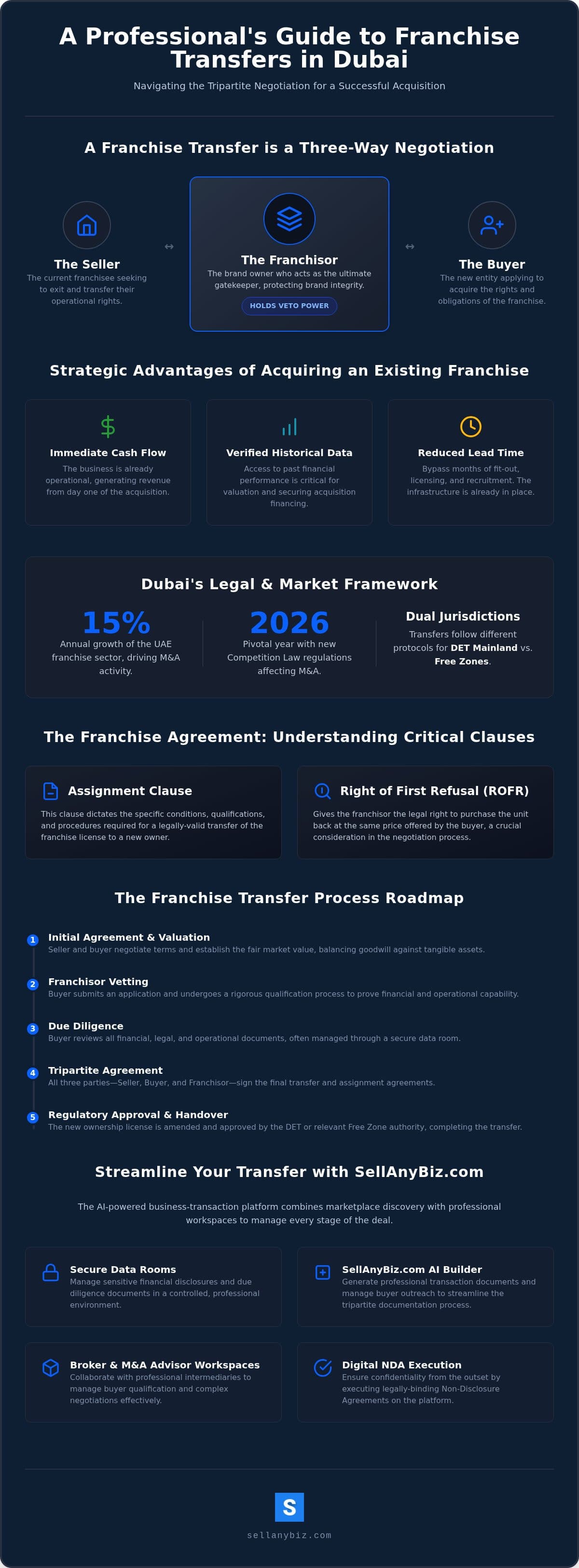
Franchise Transfer Dubai: A Strategic Guide to Resales and Acquisitions
Also available in:Italiano

A franchise transfer in Dubai is not a simple asset sale; it's a high-stakes tripartite negotiation where the franchisor holds the ultimate veto. Most buyers and sellers treat the transaction like a standard business buyout. They often hit a wall when the franchisor rejects a candidate or the Dubai Department of Economy and Tourism (DET) flags the license amendment. The technical complexity of a franchise transfer Dubai can be overwhelming. You might worry about overpaying for goodwill or getting lost in the nuances of Free Zone protocols. We understand these frustrations.
This guide provides the rational, structured roadmap you need to navigate these frictions with confidence. You'll master the mechanics of tripartite agreements, accurate valuation, and the specific regulatory frameworks governing the UAE market. We examine the shift toward contract-led frameworks under the latest Commercial Agency Laws. We also show you how the SellAnyBiz.com ecosystem simplifies the transition through secure data rooms and professional deal management tools. From initial disclosure to the final DET amendment, this is your professional blueprint for a successful acquisition.
Key Takeaways
- Understand why a franchise transfer Dubai is a three-way negotiation where the franchisor's approval is the ultimate gatekeeper for a successful exit.
- Identify the critical differences between Department of Economy and Tourism (DET) mainland license amendments and specific Free Zone protocols for ownership transfer.
- Learn how to calculate the fair market value of a franchise resale by balancing brand goodwill against tangible assets and existing royalty obligations.
- Discover how to use SellAnyBiz.com AI Builder and Secure Data Rooms to manage sensitive disclosures and streamline the tripartite documentation process.
Table of Contents
Understanding the Franchise Transfer Landscape in Dubai
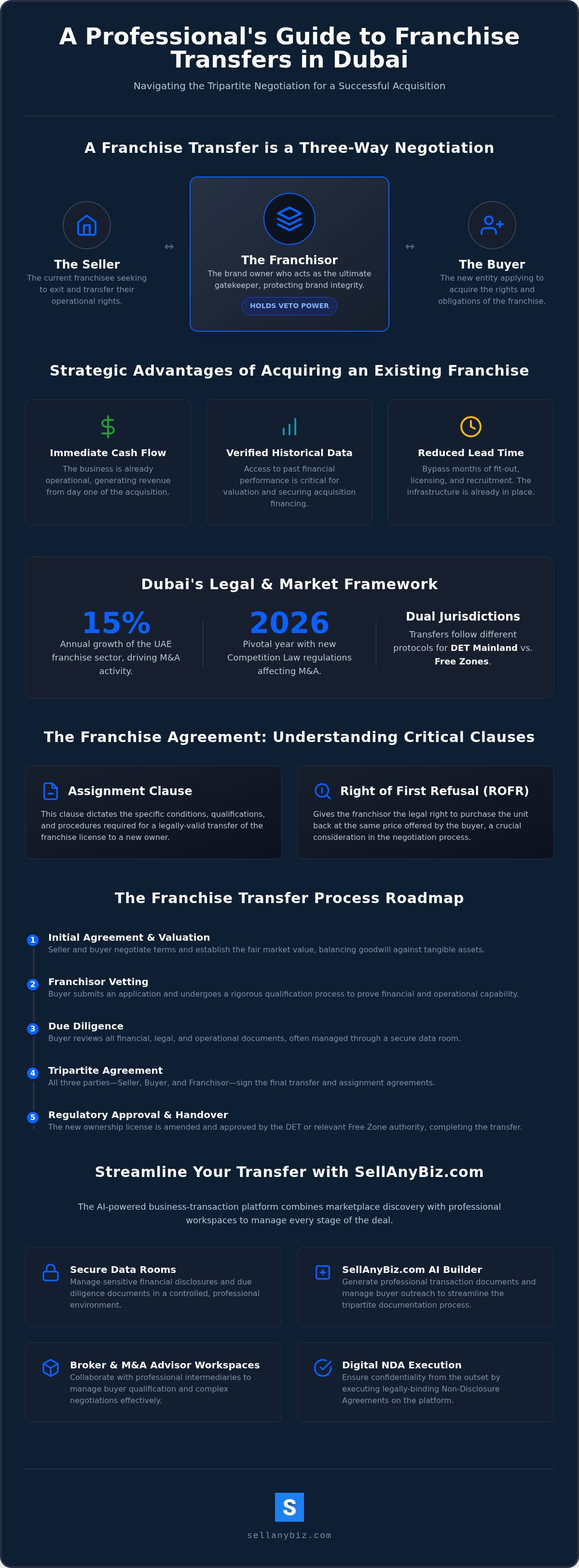
A franchise transfer Dubai is the formal legal assignment of an existing franchise agreement from a current operator to a new entity. It is not a simple asset sale. The process involves a structured transition where the buyer steps into the shoes of the seller, inheriting both the rights and the obligations defined by the franchisor. This transaction requires a high level of coordination between three distinct parties: the seller, the buyer, and the franchisor. Each has specific legal and commercial interests that must be aligned before the Dubai Department of Economy and Tourism (DET) can process the ownership change.
2026 is a pivotal year for this market. The UAE franchise sector is expanding by 15% annually, driven by a surge in retail and food and beverage (F&B) consolidation. New executive regulations for the Competition Law (Cabinet Resolution No. 59 of 2026) took effect on July 30, 2026. These regulations provide a fresh procedural framework for merger notifications and territory clauses. Investors are increasingly looking at acquisitions rather than new setups to secure market share in a competitive landscape.
Resale vs. New Unit: Strategic Advantages
Acquiring an existing franchise unit offers immediate advantages over a greenfield setup. Prime Dubai locations in major malls or established districts are often fully occupied. A resale is often the only way to secure these high-traffic spots. The strategic benefits include:
- Immediate cash flow: Operations are already active. Revenue begins on day one.
- Historical performance: Access to verified financial data. This is essential for securing acquisition funding solutions or bank financing in the UAE.
- Reduced lead time: No months spent on fit-out, licensing, or staff recruitment. The infrastructure is ready.
The Role of the Franchise Agreement
The franchise agreement is the primary governing document for any franchise transfer Dubai. It dictates the specific conditions under which a transfer is permitted. Beyond understanding the franchise model at a global level, investors must navigate local legal interactions. Federal Decree-Law No. 50 of 2022 (Commercial Transactions Law) governs unregistered franchise agreements, while Federal Law No. 3 of 2022 applies to those registered as commercial agencies.
Most agreements contain an "Assignment Clause" and a "Right of First Refusal" (ROFR). These clauses give the franchisor the power to vet the buyer or even purchase the unit back themselves. Failure to comply with these contractual steps can void the entire transaction. SellAnyBiz.com provides the professional workspaces needed to manage these sensitive documents securely during the due diligence phase.
Navigating the Tripartite Negotiation: Seller, Buyer, and Franchisor
A franchise transfer Dubai operates as a high-stakes tripartite negotiation. Unlike a typical business sale where two parties agree on a price, this transaction requires a third party’s consent: the franchisor. The franchisor isn't just a passive observer. They are the gatekeeper of the brand’s integrity. If they determine a buyer lacks the necessary capital or operational expertise, they can veto the sale regardless of the price agreed upon by the other parties. Engaging the franchisor early in the process prevents wasted due diligence and ensures everyone is aligned on the path forward.
The franchisor’s primary objective is protecting brand standards. They want to ensure that the transition doesn't disrupt customer experience or operational continuity. This often involves a Right of First Refusal (ROFR) clause. If the franchise unit is performing exceptionally well, the franchisor may choose to buy the unit back themselves at the same price offered by the buyer. Sellers must prepare for this possibility. Buyers should ensure their offers are structured to be attractive enough to withstand such a challenge. It’s a delicate balance that requires professional management from start to finish.
Qualifying the Incoming Franchisee
Franchisors in the UAE maintain rigorous standards for new operators. They typically evaluate financial standing, previous industry experience, and cultural fit. The interview process is often intense. The buyer isn't just purchasing an asset; they’re applying for a long-term partnership. It’s essential to present a polished, data-driven narrative from the start. The franchisor needs to know the brand is in safe hands before they sign off on the assignment.
Using the SellAnyBiz.com Broker and M&A Advisor Workspace allows buyers to build a comprehensive Professional Profile. This includes verified financial credentials and commercial resumes. Presenting this information through a structured platform signals commercial literacy and serious intent. You can browse active opportunities to see how different brands position their entry requirements and qualifying criteria.
The Transfer Fee and Cost Allocation
Transfer fees are a standard component of the franchise transfer Dubai landscape. These fees cover the franchisor’s administrative costs, legal reviews, and the mandatory training of the new owner. While the amount varies by brand, it’s often a fixed sum or a percentage of the original franchise fee. Negotiating who bears this cost is a critical part of the deal structure. There is no set rule, but common patterns emerge in the Dubai market:
- Seller-Paid: Often seen when the seller is motivated to exit quickly or the lease is nearing its end.
- Buyer-Paid: Common in high-demand "trophy" locations where multiple buyers are competing.
- Split: A 50/50 split is a frequent compromise in balanced, professional negotiations.
Watch for hidden costs. Franchisors frequently mandate a "site refresh" or equipment upgrades as a condition of the transfer. These capital expenditures can significantly impact the final deal value. Ensure these requirements are surfaced early in the data room to avoid last-minute price renegotiations during the closing stages.
Legal and Jurisdictional Frameworks for Dubai Transfers
The legal architecture of a franchise transfer Dubai depends entirely on the jurisdiction of the underlying trade license. Dubai operates under a dual-system: Mainland and Free Zones. Each has distinct regulatory bodies and procedural requirements. While the commercial deal happens between parties, the legal validity of the transfer rests on the formal amendment of the corporate documents with the relevant authorities. A failure to synchronize the private contract with the public license can result in significant operational delays or fines.
The UAE Ministry of Economy plays a specific role for franchises registered as commercial agencies under Federal Law No. 3 of 2022. If the franchise is registered, the transfer must be recorded in the Commercial Agencies Register. This registration provides the franchisee with statutory protections regarding termination and compensation. For unregistered franchises, Federal Decree-Law No. 50 of 2022 (Commercial Transactions Law) provides the governing framework. Determining which law applies is a critical first step in due diligence.
Documentation typically follows one of two paths: a Novation Agreement or a New Franchise Agreement. A Novation Agreement is a tripartite contract where the buyer steps directly into the seller's existing rights and obligations. This is common when the remaining term of the franchise is long. Alternatively, the franchisor may require the seller to terminate their agreement so the buyer can sign a fresh contract. This "clean break" approach allows the franchisor to update royalty rates or modernise terms for the incoming operator.
Mainland Dubai (DED) Transfer Steps
Mainland transfers are managed through the Department of Economy and Tourism (DET). The process is essentially a license amendment. It requires the submission of a legally binding contract of sale and an amended Memorandum of Association (MOA). The DET will not process these changes without a formal "No Objection Certificate" (NOC) from the franchisor. This NOC confirms that the franchisor approves the new owner and that all outstanding royalties have been settled. Once the license is updated, the new entity must refresh its establishment card and labor files to ensure the legal transition of employees under UAE labor laws.
Free Zone Transfers and Lease Assignments
Free Zone jurisdictions like DIFC, DMCC, or DAFZA have their own registrar rules. These often involve a choice between a share transfer or an asset transfer. In a share transfer, the buyer acquires the entity owning the franchise, which simplifies the license amendment but requires deeper financial due diligence. Asset transfers involve moving the franchise rights to a new Free Zone entity.
Lease assignments are a critical bottleneck in major hubs like Dubai Mall or Mall of the Emirates. Landlords in these prime locations often have their own vetting processes. The buyer must secure lease assignment approval in parallel with the franchise transfer. SellAnyBiz.com provides the legal support and documentation tools necessary to manage these multi-layered approvals. Our secure data rooms allow for the confidential exchange of lease terms and authority requirements between all transaction participants.
The Franchise Transfer Process: From Valuation to Closing
Executing a franchise transfer Dubai requires a methodical progression from financial modeling to the final regulatory sign-off. This isn't a standard asset sale. It's the transition of a brand ecosystem. The process begins with an Information Memorandum that satisfies both the acquisition intent of the buyer and the brand standards of the franchisor. Professional deal management ensures that every disclosure is tracked and every milestone is met without disrupting daily operations. Success depends on the quality of the data presented at the outset.
The closing phase is the most complex stage. It involves the simultaneous execution of the sale contract, the franchisor’s consent, and the Department of Economy and Tourism (DET) license amendment. In the Dubai market, using a secure escrow arrangement for the purchase price is standard practice. This protects both parties until the new trade license is issued in the buyer’s name. Clear communication between the buyer, seller, and franchisor during this window is vital to prevent administrative bottlenecks.
Valuation of a Franchise Resale
Valuing a franchised business differs significantly from valuing independent SMEs. The most critical factor is the remaining term on the franchise agreement. If only three years remain on a ten-year term, the enterprise value must reflect the risk and cost of renewal. You must also factor in the mandatory transfer fee. This fee is often a fixed cost that reduces the seller’s net proceeds or increases the buyer’s entry price.
Market multiples in Dubai for F&B and retail franchises are influenced by location and brand strength. A unit in a Tier-1 mall carries a higher goodwill premium than a standalone suburban site. To ensure your numbers align with current transactional data, utilize the SellAnyBiz.com Valuation Builder. It provides a structured framework for calculating fair market value based on historical performance and UAE-specific market conditions.
Due Diligence and Disclosure
Due diligence in a franchise context goes beyond auditing bank statements. You must verify the status of royalty payments and marketing fund contributions. Any arrears can block the franchisor’s approval of the transfer. It’s also essential to review supply chain compliance. Ensure the seller hasn't been sourcing unapproved products, as this could lead to post-closing penalties from the franchisor.
The physical asset value must be weighed against the "Goodwill" premium. In Dubai, franchisors often mandate a "site refresh" or renovation upon transfer. These costs should be identified early. Review the status of the lease agreement and the No Objection Certificate (NOC) from the landlord. If you're ready to begin your search for a qualified opportunity, you can browse verified franchise resales on our platform to compare deal structures and disclosure levels.
Streamlining Transfers with SellAnyBiz.com
Managing a franchise transfer Dubai through fragmented emails and unencrypted attachments creates unnecessary risk. SellAnyBiz.com is an AI-powered business-transaction platform that replaces these inefficiencies with a connected ecosystem. We provide the infrastructure needed to handle the entire transaction lifecycle. From the first buyer inquiry to the final franchisor sign-off, every step is managed within a secure, professional environment. This structure builds trust between all parties and ensures that sensitive commercial data remains protected.
Franchisors are notoriously protective of their intellectual property. Our Secure Data Rooms allow sellers to share proprietary operating manuals and financial disclosures with confidence. Access is granular. You decide who sees what and when. This level of control is essential for protecting brand standards during the due diligence phase. By centralizing communication, the platform eliminates the information silos that often cause deal fatigue or collapse.
The SellAnyBiz.com Broker and M&A Advisor Workspace
Winning a transfer mandate requires more than just a network. It requires a demonstration of technical expertise. The SellAnyBiz.com Broker and M&A Advisor Workspace equips professionals with the tools to manage complex tripartite workflows. Advisors can generate professional valuation reports that align with Dubai market realities. They can track buyer intent in real-time. The workspace also facilitates seamless collaboration with legal and financial teams. This ensures that the license amendment and contract novation move forward in parallel. It’s a disciplined approach to deal management that prioritizes outcomes over activity.
AI-Powered Deal Management
The SellAnyBiz.com AI Builder streamlines the creation of essential transaction documents. It generates confidential teasers and digital NDAs tailored to the needs of Dubai investors. It also assists in drafting the comprehensive Information Memorandum required by franchisors. This reduces the administrative burden on the seller while maintaining a high standard of presentation. Finding the right buyer is equally structured. Our AI Smart Search surfaces vetted candidates with specific experience in the franchise sector. This targeted outreach ensures that you’re connecting with qualified individuals rather than casual browsers. The platform maintains a secure, confidential process from listing to completion, providing a rational solution to the complexities of the Dubai market.
Securing Your Position in the Dubai Franchise Market
A successful franchise transfer Dubai is a strategic move that requires precise execution. It isn't just about finding a buyer or a seller; it's about navigating a complex tripartite relationship where the franchisor holds the keys to the exit. You've learned that legal compliance, from Department of Economy and Tourism (DET) license amendments to specific Free Zone protocols, is the foundation of a valid transaction. Accurate valuation must account for the remaining agreement term and mandatory transfer fees to ensure a fair enterprise value for all parties involved.
SellAnyBiz.com provides the rational, structured solution to these frictions. Our platform offers AI-powered valuation tools specifically calibrated for the Dubai market. You can utilize Secure Data Rooms for confidential disclosures and manage the entire process through our end-to-end deal management system. This connected ecosystem supports you from initial engagement through to final completion. Whether you're looking to exit a successful unit or acquire a proven brand, the right infrastructure makes the difference. Move forward with the confidence of a seasoned professional and the data needed to close the deal.
Start your franchise transfer on SellAnyBiz.com today
Frequently Asked Questions
What is a typical franchise transfer fee in Dubai?
A franchise transfer fee in Dubai is typically structured as a fixed sum or a percentage of the original franchise fee. These costs cover the franchisor’s administrative reviews, legal documentation, and the mandatory training of the incoming operator. While the specific amount is defined in the franchise agreement, the allocation of this cost is a key point of negotiation between the buyer and seller during the franchise transfer Dubai process.
Can a franchisor in the UAE block the sale of my business?
Yes. The franchisor holds the legal right to veto any sale through the "Assignment Clause" in the agreement. They evaluate the buyer’s financial standing, previous industry experience, and cultural alignment with the brand. Since the franchisor’s primary goal is to protect operational continuity and brand standards, they won't grant a No Objection Certificate (NOC) if the candidate doesn't meet their specific qualifying criteria.
Do I need a new trade license when buying an existing franchise?
You don't usually need a new license. Instead, the process involves a license amendment through the Department of Economy and Tourism (DET) or the relevant Free Zone registrar. This amendment updates the partners or owners on the existing trade license. It's a more efficient route than a fresh setup. A successful franchise transfer Dubai depends on synchronizing this government update with the private novation of the franchise agreement.
How long does a franchise transfer usually take in Dubai?
A typical transfer takes between three and six months. This timeline accounts for the franchisor’s vetting process, the buyer’s due diligence, and the administrative processing at the DET or Free Zone authorities. If the franchise agreement includes a Right of First Refusal (ROFR), you should account for an additional 30 to 60 days. Using a structured platform like SellAnyBiz.com can help streamline document exchange and reduce these technical delays.
What is the Right of First Refusal (ROFR) in a franchise agreement?
The Right of First Refusal is a contractual clause that gives the franchisor the first opportunity to buy the business back. If you receive a legitimate offer from a third party, you must present those terms to the franchisor first. They can then choose to match that price and acquire the unit themselves. This mechanism ensures the franchisor maintains control over who operates their brand in high-value territories.
Is the process different for a franchise transfer in a Dubai Free Zone?
The administrative steps vary by jurisdiction. Free Zones like DIFC or DMCC have their own registrar rules and often allow for share transfers, which can simplify the license amendment process. However, you must also navigate the specific lease assignment rules of the Free Zone authority. While Mainland transfers focus on DET protocols, Free Zone acquisitions require a deep understanding of the specific commercial regulations governing that particular hub.
Do I need to hire a business broker for a franchise resale?
While not a legal requirement, hiring a professional broker is a strategic advantage. Managing a tripartite negotiation is technically demanding and requires a high level of coordination. Brokers use the SellAnyBiz.com Broker and M&A Advisor Workspace to manage confidential data rooms and qualify potential buyers. They ensure that the Information Memorandum meets franchisor standards, which significantly increases the probability of a successful and timely approval.
What happens to the employees during a franchise transfer in the UAE?
Employees are generally transferred to the new owner to ensure operational continuity. This transition requires updating the establishment card and labor files with the Ministry of Human Resources and Emiratisation (MoHRE) or the relevant Free Zone authority. Under UAE labor laws, the new owner usually inherits the employees’ length of service and accrued benefits. It's essential to audit these liabilities during the due diligence phase to avoid unexpected post-closing costs.
Disclaimer
Disclaimer: SellAnyBiz provides general business marketplace, brokerage and transaction-support information. Services may be subject to regional legal and regulatory requirements. Please review our Disclaimer & Compliance Notice for full details.