Business Sales Brokers: Navigating Mid-Market Transactions in 2026
Also available in:Italiano

The traditional rolodex is no longer enough to close a mid-market deal. In 2026, the most effective business sales brokers have moved beyond manual outreach and static listings. They're operating within integrated ecosystems where AI identifies acquisition intent before a buyer even submits an inquiry. If you're still relying on a broker who uses spreadsheets and cold calls, you're likely leaving significant value on the table.
Selling a business is high-stakes. It's often frustrating. You've likely worried about confidentiality leaks or wasted weeks on due diligence with unqualified buyers. These friction points aren't just annoyances. They're deal killers that erode valuation. You deserve a process that's as structured and professional as the company you've built.
This article explores how modern technology is fixing these broken processes. You'll discover how AI-powered ecosystems like SellAnyBiz.com are replacing traditional models to secure higher valuations and faster closings. We'll examine the shift toward secure transaction environments that offer global reach, accurate valuation reports, and professional legal support. It's time to move from a simple listing to a managed deal flow.
Key Takeaways
- Understand how modern intermediaries bridge the gap between complex seller expectations and global acquisition intent in the 2026 market.
- Learn why data-backed business valuation reports and professional document preparation are essential for securing premium mid-market offers.
- Discover how leading business sales brokers leverage AI-powered ecosystems to replace slow, manual workflows with automated buyer matching.
- Identify the critical technology benchmarks you must use when vetting a broker's ability to manage high-stakes transactions securely.
- Explore how integrated workspaces and AI-driven tools accelerate the deal lifecycle from initial mandate to final due diligence.
Table of Contents
The Role of Business Sales Brokers in the 2026 Market
A Business broker serves as a critical intermediary in the private capital markets. They facilitate the transfer of ownership through a structured, multi-stage process. In 2026, the definition of this role has evolved. It's no longer just about making introductions. Business sales brokers now act as architects of transaction environments. They bridge the gap between seller expectations and buyer intent. This alignment is essential for closing deals in a market where buyers are increasingly cautious and data-driven.
The transition from local rolodexes to global digital networks is complete. Sellers no longer look for a buyer in their backyard. They look for the best strategic fit across borders. Mid-market businesses require specialized representation because of their inherent complexity. Practitioners often define the lower middle market as companies with $10 million to $50 million in annual revenue. The core middle market extends to $500 million. These entities possess sophisticated management teams and intricate financial structures. They demand a professional approach that "Main Street" brokers simply aren't equipped to provide. You can explore active mandates within this tier on the SellAnyBiz.com listings page.
Why Professional Representation Matters
Confidentiality is the primary concern for any mid-market seller. A premature disclosure can ruin employee morale and trigger aggressive moves from competitors. Professional brokers manage this risk through tiered access. They use digital NDAs and secure data rooms to control the flow of information. Beyond privacy, they navigate the labyrinth of financial due diligence. This process has become more rigorous in 2026. Buyers expect verified, clean data before they even consider an LOI. Brokers also provide access to institutional capital. This includes private equity firms, family offices, and search funds. These buyers rarely engage with unrepresented sellers. They look for a structured deal flow that matches their internal acquisition criteria.
The Cost of Selling Without a Broker
The risks of a DIY transaction are substantial. Without professional positioning, owners often face "fire sales" where the business is significantly undervalued. Market data suggests that unbrokered deals have higher failure rates, particularly when negotiations hit the due diligence phase. The time drain is another critical factor. Managing a transaction is a full-time commitment. When a founder attempts to lead the sale, the business often suffers. Profits dip. Operations falter. This decline gives buyers leverage to "re-trade" or lower their offer during the final stages. A broker acts as a shield. They allow the owner to focus on maintaining performance while the transaction moves toward a successful close.
Core Services Provided by Top-Tier Brokers
Success in a mid-market transaction depends on the quality of the preparation. Professional business sales brokers don't simply list a company; they engineer the deal from the ground up. This begins with forensic-level documentation and ends with a closed transaction that meets the seller's financial and legacy goals. Top-tier advisors provide a suite of services designed to eliminate friction and maximize enterprise value.
Valuation and Market Positioning
An accurate Business Valuation Report is the foundation of any mandate. It provides the data-backed justification for the asking price. Brokers use the SellAnyBiz.com Valuation Builder to ensure accuracy by integrating real-time market data and historical transaction multiples. A key part of this process is normalising EBITDA. This involves identifying hidden value drivers and adjusting for non-recurring expenses or discretionary owner spending. SellAnyBiz.com organises valuation inputs into a structured framework to produce professional, audit-ready report outputs that withstand the scrutiny of sophisticated buyers.
Marketing and Outreach Strategies
Once the valuation is set, the broker prepares the Confidential Information Memorandum (CIM) and a high-level teaser. These documents must be compelling but professional. They provide the necessary details to spark acquisition intent without compromising the seller's identity. Marketing occurs through the SellAnyBiz.com Marketplace, where listings remain confidential until a prospect is vetted. AI-driven outreach then identifies targeted buyer databases, surfacing candidates who've previously shown interest in similar sectors or scales.
Vetting is a non-negotiable step. Business sales brokers qualify potential buyers to ensure they have the funding capability and strategic fit required to close. This includes executing digital NDAs before any sensitive company data is released. In 2026, deal structures have become increasingly complex. Data from Axial indicates that earn-outs were part of 29% of lower-middle market deals in recent quarters. Brokers manage these negotiations, balancing multiples against performance-based payouts to protect the seller's interests. You can observe how these professional standards are applied by reviewing the active mandates on the SellAnyBiz.com listings page.
AI-Powered Ecosystems vs. Traditional Brokerage
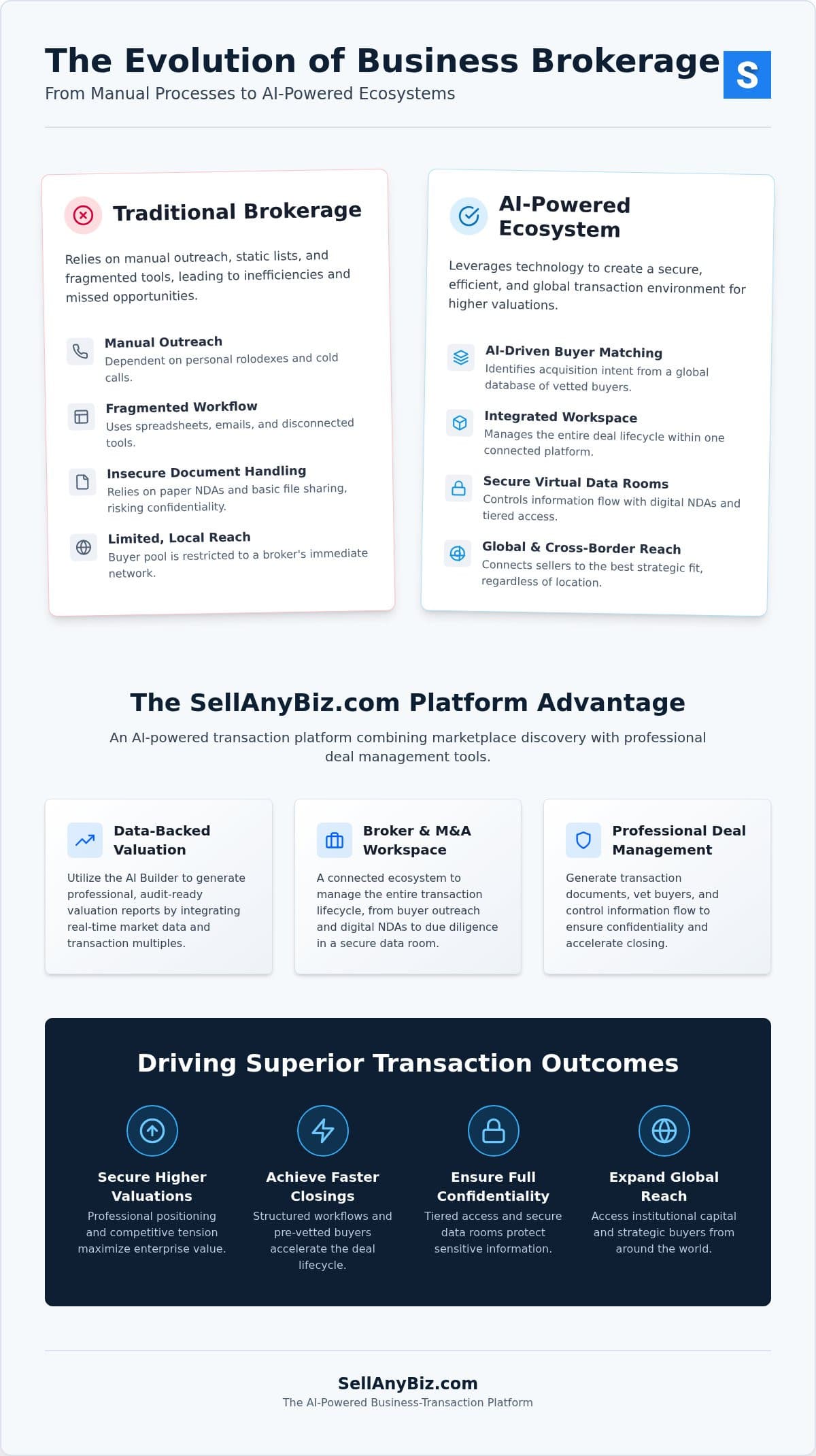
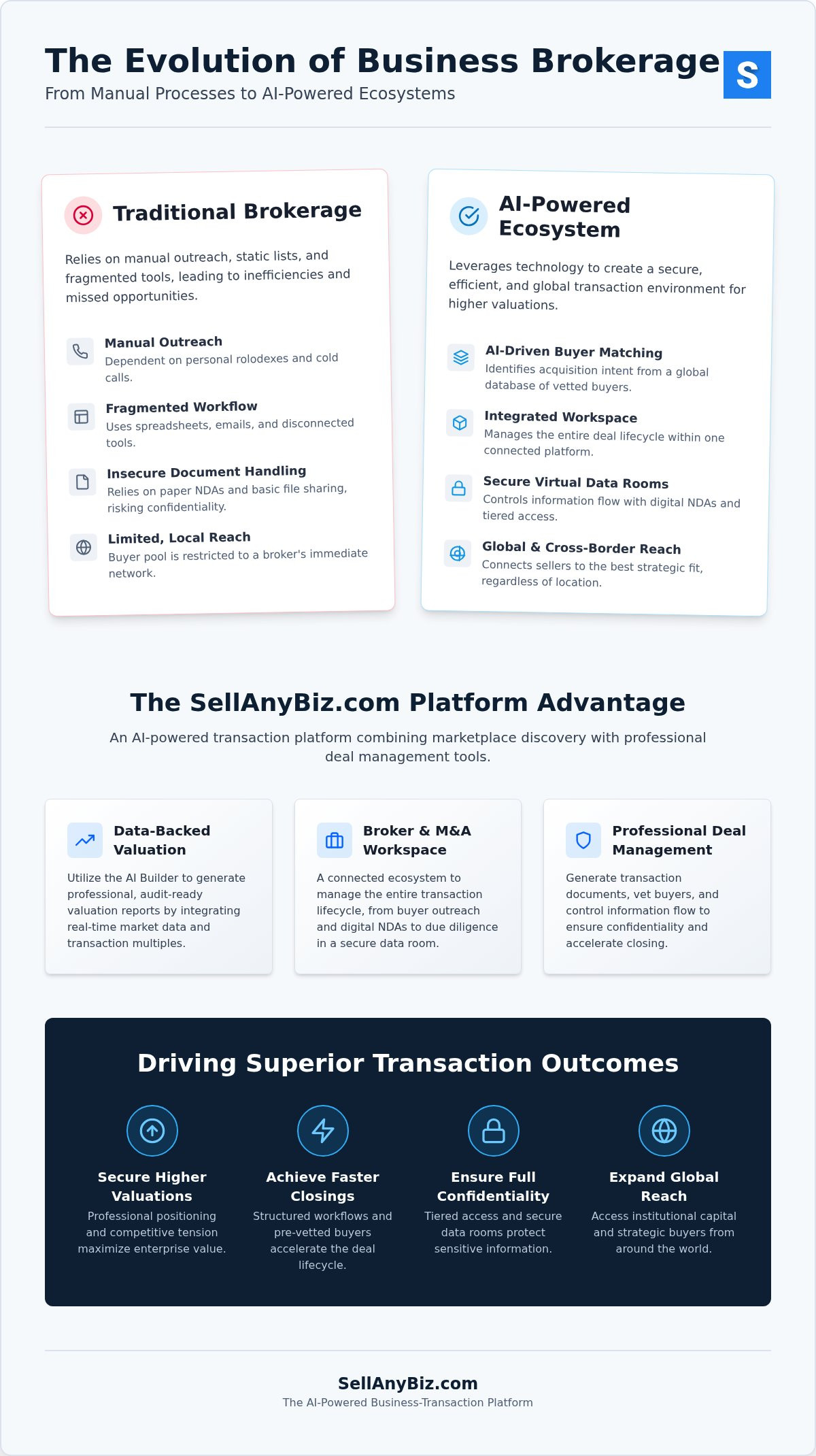
The gap between traditional brokerage and technology-enabled platforms has widened. Conventional business sales brokers often rely on manual document creation and localized contacts. This approach is inherently limited by the broker's personal reach and administrative capacity. In contrast, SellAnyBiz.com operates as a connected ecosystem. It integrates AI Smart Search to enable natural-language discovery. Instead of browsing static lists, buyers and advisors search for specific acquisition intent. This surfaces matches based on strategic fit rather than just industry keywords.
Automation is the second major differentiator. Traditional deals frequently stall during the exchange of NDAs and the drafting of an initial LOI. These stages involve repetitive back-and-forth communication that adds weeks to the timeline. SellAnyBiz.com automates these workflows. Digital NDAs are executed instantly. LOI templates are generated within the platform. This shifts the focus from administrative hurdles to deal momentum. Centralised deal management replaces fragmented email chains. Every participant has a single source of truth, reducing the risk of version-control errors during due diligence.
The SellAnyBiz.com Workspace Advantage
Success requires a structured environment. The SellAnyBiz.com Broker and M&A Advisor Workspace provides role-based operating environments. Advisors manage multiple mandates from a single dashboard. This visibility includes transaction stages, pending tasks, and a detailed activity history. It ensures that no critical milestone is missed. Secure Data Rooms provide permission-controlled document access. This is vital for maintaining confidentiality while allowing verified buyers to conduct a thorough review of financial and legal records. It doesn't just store files; it manages access rights dynamically.
AI Builder: Accelerating Transaction Speed
Preparation used to take weeks. The SellAnyBiz.com AI Builder changes this timeline. It generates professional teasers and pitch materials in minutes. This speed allows business sales brokers to hit the market while buyer interest is at its peak. The system also organises due diligence checklists automatically based on the specific business profile. AI improves preparation by synthesizing complex data sets into actionable formats, allowing advisors to focus their human judgment on high-stakes negotiation strategy. This combination of speed and precision directly influences the final valuation by presenting a more professional, prepared entity to the market.
How to Select the Right Business Sales Broker
Choosing a representative for a mid-market transaction is a high-stakes decision. It requires a move away from personal relationships toward an assessment of institutional capability. The best business sales brokers are those who function as platform architects rather than simple intermediaries. You need a partner who possesses the specific industry experience to understand your sector's unique value drivers and transaction multiples. A broker with a deep background in healthcare won't necessarily have the requisite network to close a deal in industrial manufacturing.
Technology is the next critical benchmark. In 2026, a broker's tech stack is a direct indicator of their efficiency. Ask if they use a modern, AI-powered platform to manage mandates. A firm relying on fragmented email chains and local spreadsheets can't compete with the global outreach capabilities of an integrated ecosystem. You should also verify their track record of successful mid-market closings. Evidence of completed deals within the $10 million to $500 million range is more valuable than a high volume of small sales. Finally, understand their fee structure. While advisory retainers are common for complex deals, the bulk of the compensation should be tied to success fees. Standard success fees of 5% to 8% are typical for facilitated transactions in this tier, ensuring alignment between your goals and the broker's incentives.
Key Questions for Potential Brokers
Interrogate their operational processes before signing a mandate. Start with confidentiality. How specifically will they protect your business's identity? They should describe a tiered approach using digital NDAs and permission-controlled data rooms. Ask about their international buyer strategy. A broker who only looks at domestic candidates is ignoring the $2.5 trillion in global private equity dry powder currently seeking quality assets. Finally, inquire about due diligence management. You need to know how they'll keep the transaction moving when the buyer's auditors begin their forensic review. To see how professional mandates are presented to a global audience, you can browse current business listings on the platform.
Red Flags to Avoid
Red flags often appear early in the engagement. Avoid brokers who promise unrealistic valuations just to win your mandate. If a valuation seems too good to be true, it likely is. A lack of transparency regarding how buyers are qualified is another major risk. You don't want to waste time with window shoppers who lack the capital to close. Finally, be wary of outdated marketing methods. Firms that rely solely on public classified-listing sites often compromise confidentiality and attract low-quality leads. Business sales brokers should have a structured, private outreach plan that targets verified acquisition intent.
The Transaction Lifecycle on SellAnyBiz.com
The transaction lifecycle on SellAnyBiz.com is a methodical progression. It moves from initial mandate to final completion within a single, secure environment. Traditional business sales brokers often struggle with fragmented communication across multiple disjointed tools. SellAnyBiz.com solves this friction by providing a unified infrastructure for all participants. Every stage is tracked. Every document is secured. The process is designed to maintain deal momentum while protecting the interests of both parties. It's a structured approach to a high-stakes event.
Preparation begins with the seller workspace. This environment centralises all critical transaction data. Financial records, legal documents, and operational reports are organised here from the start. The SellAnyBiz.com AI Builder then processes these inputs to create professional materials. It generates teasers and CIMs that are ready for immediate market review. This isn't just about administrative speed. It's about presenting a coherent, data-backed narrative to sophisticated acquirers who demand precision.
Preparation and Discovery
Strategic buyer discovery is the next phase. The SellAnyBiz.com Marketplace provides the platform for this engagement. It connects sellers with a global pool of vetted buyers, including private equity firms and strategic corporate acquirers. AI Outreach campaigns target specific acquisition intent. These campaigns are surgical. They reach candidates who match the exact profile of the business. Advisors track interest through an integrated CRM. This provides real-time visibility into engagement levels. You can see who's reviewing the teaser and who's progressed to executing a digital NDA.
Negotiation and Closing
The platform manages Q&A sessions during the due diligence phase. This maintains a clean, auditable record of all disclosures. It prevents the confusion inherent in fragmented email chains. When negotiations reach the term sheet stage, business sales brokers use the platform to manage the execution of LOIs. Final contracts are moved toward completion with professional legal and financial support. This ensures the transaction is structured correctly for tax efficiency and risk mitigation. The lifecycle ends with a smooth transition. The new owner-operator receives a structured handover of all essential data, ensuring the business continues to perform post-acquisition.
Securing the Future of Your Mid-Market Transaction
The landscape for mid-market deals has fundamentally shifted. Success in 2026 requires more than just industry contacts. It demands an infrastructure that prioritizes data integrity and global reach. Professional business sales brokers now leverage AI-powered deal management to remove the friction that typically kills momentum. By utilizing secure, confidential transaction workspaces and a global network of vetted buyers, you protect your enterprise value while accelerating the timeline to close.
This structured environment ensures that every stage, from initial valuation to final due diligence, is managed with institutional precision. You don't have to settle for fragmented communication or manual document handling. The tools to professionalize your exit or acquisition are already available. It's about moving from a reactive process to a managed deal flow. Your business represents years of effort. It's only right that its transfer is handled with the same level of discipline you used to build it. Take the first step toward a secure, optimized closing today.
Register your acquisition mandate for free on SellAnyBiz.com
Frequently Asked Questions
What do business sales brokers typically charge in 2026?
Success fees are the industry standard for mid-market transactions. Most business sales brokers charge between 5% and 8% of the total enterprise value upon a successful closing. This commission structure ensures the advisor is motivated to secure the highest possible valuation. Some firms in markets like New York or London may also apply fixed fees for upfront advisory work. These cover the costs of legal drafting, bookkeeping, and preparing the initial valuation reports.
How is a business broker different from an M&A advisor?
The primary difference involves the scale and complexity of the transaction. Business brokers typically handle smaller, "Main Street" companies valued under $2 million. M&A advisors manage mid-market deals, often ranging from $10 million to $500 million in revenue. While brokers facilitate straightforward ownership transfers, M&A advisors navigate sophisticated financial structures and institutional buyers. They specialize in the lower-middle market where due diligence requirements are significantly more rigorous for both parties.
Can I sell my business confidentially without a broker?
Maintaining total confidentiality while managing a DIY sale is extremely difficult. It requires you to vet every prospect for acquisition intent while simultaneously running your daily operations. Most unrepresented sellers inadvertently leak information to employees or competitors. Using a platform like SellAnyBiz.com provides the necessary infrastructure to stay private. You can manage access through secure data rooms and digital NDAs. This ensures your identity remains protected until a buyer is verified and qualified.
How does SellAnyBiz.com help brokers win more mandates?
SellAnyBiz.com provides business sales brokers with a professional workspace that streamlines the entire deal lifecycle. Brokers use the AI Builder to generate teasers and Information Memorandums in minutes rather than days. This speed allows them to present a polished, data-driven strategy to potential clients immediately. Access to a global network of vetted buyers and automated outreach tools also proves the broker's ability to reach strategic acquirers. It shifts the perception from a manual service to a technology-enabled ecosystem.
What documents are required before listing a business for sale?
Preparation requires a comprehensive collection of financial and legal records. You'll need three to five years of profit and loss statements, balance sheets, and tax returns. Accurate bookkeeping is essential for normalising EBITDA and identifying discretionary owner expenses. Other critical items include property leases, employee contracts, and major supplier agreements. Organising these documents within a structured workspace before hitting the market prevents deal fatigue. It ensures you can respond to buyer inquiries with professional precision.
How long does the average business sale take with a broker?
A typical mid-market transaction takes between six and twelve months from mandate to completion. This timeline accounts for the preparation of materials, buyer discovery, and the intensive due diligence phase. While AI-powered tools on SellAnyBiz.com accelerate document creation and matching, the legal and financial verification stages still require time. A structured process managed by an experienced professional helps maintain momentum. It prevents the transaction from stalling in cities like Milan or Chicago where market conditions can shift quickly.
What is the role of AI in modern business brokerage?
AI acts as a platform architect that automates administrative friction. It generates professional transaction documents and organises due diligence checklists based on specific business profiles. Smart search tools use natural-language processing to surface buyers with genuine acquisition intent. This technology doesn't replace human judgment; it enhances it. By handling repetitive tasks, AI allows advisors to focus on high-stakes negotiation. It improves preparation accuracy and ensures the business is positioned correctly for a global audience.
How do I verify the credentials of a business sales broker?
Review their track record of successful closings within your specific industry and revenue tier. A broker should demonstrate experience in the mid-market segment, specifically deals between $10 million and $500 million. Assess their technology stack to confirm they use secure data rooms and modern deal-management tools. Ask for references from past clients in major hubs like Dubai, Manchester, or Houston. Credible advisors are transparent about their fee structures and their methods for vetting potential buyers.
Disclaimer
Disclaimer: SellAnyBiz provides general business marketplace, brokerage and transaction-support information. Services may be subject to regional legal and regulatory requirements. Please review our Disclaimer & Compliance Notice for full details.