Use Case 50
Work inside deal workspaces
Platform walkthrough
Learn from the actual platform screens and written steps, then perform the authorized actions in your own workspace. Actions explained in the video are not necessarily completed in the example.
Browse use cases for Service providerStep-by-step guide
The same walkthrough in writing, with a screenshot for every step.
This walkthrough uses actual platform screens. Actions requiring an authorized user are explained for you to perform in your workspace.
1. Agree the collaboration need
Find the relevant accessible deal. Define task, side and required evidence before changes or invitations. Q&A captures explain an organiser’s fictional room.
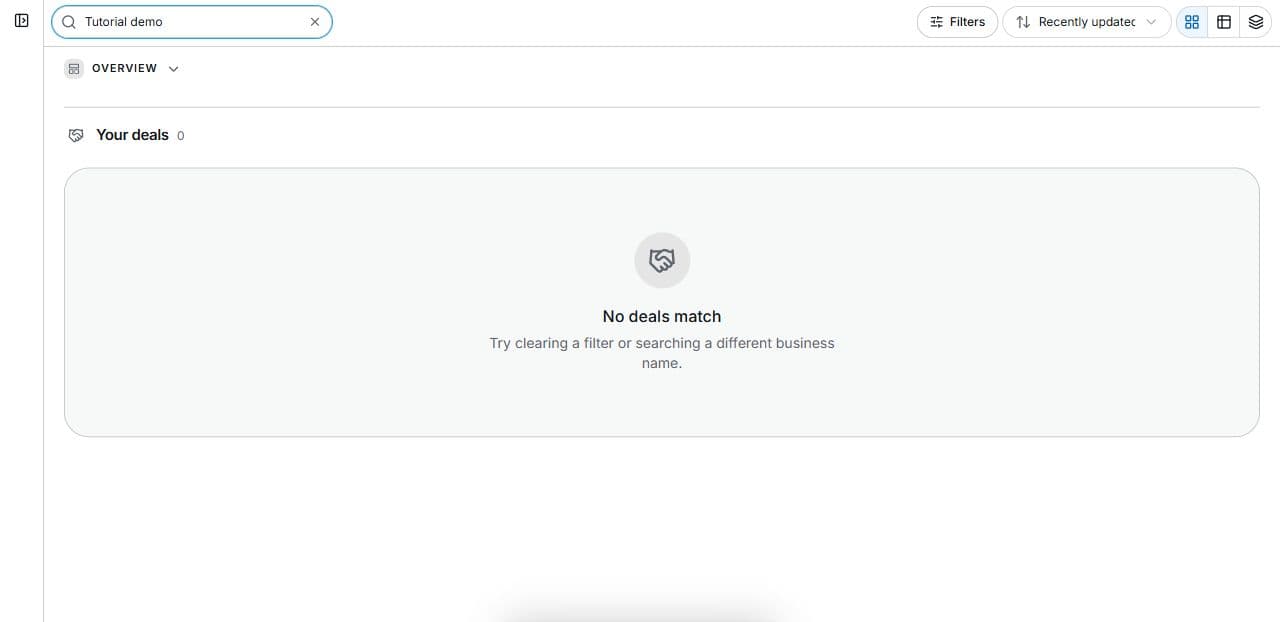
2. Keep team discussion on the right side
In the permitted room, inspect Q&A → Team → Only your team can see. Check Open / Answered. This captured organiser room explains audience boundaries; no note is posted.
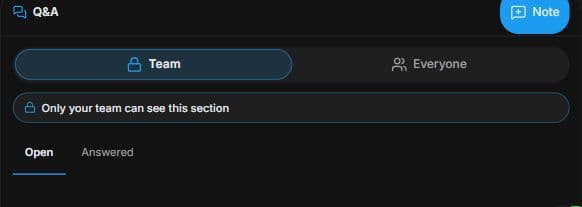
3. Prepare the shared question carefully
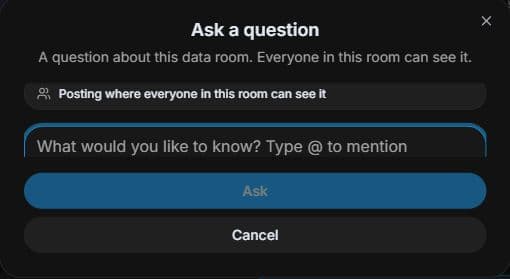
Inspect Q&A → Everyone → Everyone in this room can see. Use Ask to prepare a precise draft; posting requires the final Ask action. Review audience and wording. No question is posted.
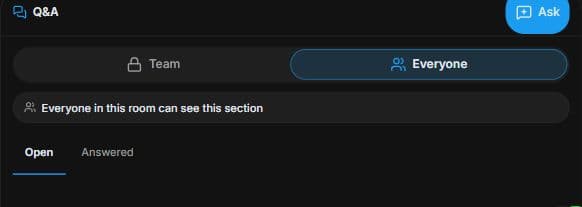
4. Review the outcome and next step
Keep question, authorised source version and resulting next action connected in the permitted workspace. Check audience before posting a professional comment. If controls are missing, ask the organiser about your role rather than another side’s access. The useful outcome is a clear accountable response, with private reasoning and shared evidence separated by the actual room controls.
Common questions
Short answers to what people ask most about this part of the product.
Why can I read files but not manage participants?
Reading and participant management are different permissions. Ask the authorised organiser to review role and scope for your assignment.
What belongs in a professional deal comment?
Link a precise question to the authorised source version and next responsible action. Check audience and keep private client reasoning out of room-visible discussions.
Why are the shown controls in English?
These real platform captures use English labels. Italian narration and instructions retain them so you can identify the exact shown controls.
Video transcript
You need to resolve a deal question with the broker and client while preserving the evidence trail. Find the permitted record and confirm membership. Decide whether it needs an internal note or a room-visible evidence question. Use your own permissions and the right audience, not a shared login or unreviewed copy of private client files. In the room’s Q and A, Team is labelled Only your team can see. Use that audience for internal review rather than assuming every discussion belongs with all participants. Open and Answered help distinguish unresolved questions from responses. Visibility is controlled by room membership and permissions. Check which team and room you are in before adding a note; this demonstration posts nothing. Everyone is labelled Everyone in this room can see; it is room-visible, not public on the website. Use a specific evidence question that those permitted participants can answer. Ask opens a draft and the posting control submits it, so review the audience and wording first. Keep private team commentary out of shared questions. Keep question, authorised source version and resulting next action connected in the permitted workspace. Check audience before posting a professional comment. If controls are missing, ask the organiser about your role rather than another side’s access. The useful outcome is a clear accountable response, with private reasoning and shared evidence separated by the actual room controls.
Watch the video, or follow the written steps below. Both cover the same walkthrough.
Next guide