Use Case 35
Review borrower profiles
Platform walkthrough
Learn from the actual platform screens and written steps, then perform the authorized actions in your own workspace. Actions explained in the video are not necessarily completed in the example.
Browse use cases for LenderStep-by-step guide
The same walkthrough in writing, with a screenshot for every step.
This walkthrough uses actual platform screens. Actions requiring an authorized user are explained for you to perform in your workspace.
1. Define the research question
Open Browse → Companies. Distinguish company research from a confirmed transaction or verified credit file.
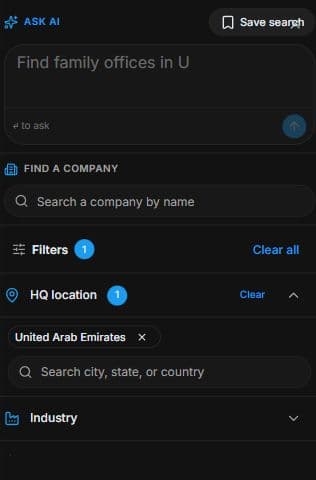
2. Narrow the company list
Open Browse → Companies → Filters. Set industry, country and relevant characteristics. Inspect Profile and confirm material facts against authorised current evidence.
3. Interpret signals as research leads
Inspect Signals → Buying / Selling / Neutral. Distinguish signals from confirmed intent and capacity. Revisit criteria through Saved searches where available. No contact is sent.
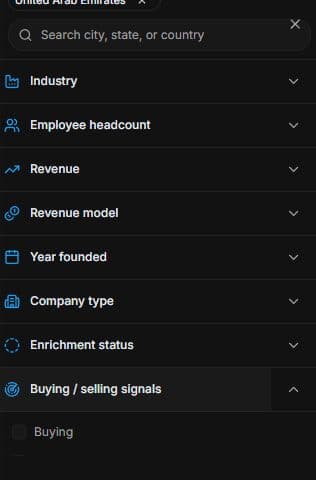
4. Review the outcome and next step
Request current financials, the use-of-funds plan and the institution’s required evidence through approved access. Profile and signals cannot establish affordability or creditworthiness alone. Keep underwriting separate and check reporting periods before analysis. The practical outcome is a defined evidence gap and next question, not a lending decision or an automatically verified borrower.
Common questions
Short answers to what people ask most about this part of the product.
Is a company profile enough for underwriting?
No. Verify identity, current financial evidence and institutional requirements independently. Signals are research context.
What profile gaps require current evidence?
Confirm legal entity, applicant authority, financial periods and use-of-funds plan. Company signals do not establish ownership, affordability or creditworthiness.
Why are the shown controls in English?
These real platform captures use English labels. Italian narration and instructions retain them so you can identify the exact shown controls.
Video transcript
You need to research the company connected to a finance enquiry before requesting the borrower pack. Open Companies and compare the profile with the stated transaction. This is research, not a verified credit file. Confirm the legal entity and the applicant’s authority, then identify which current financial and ownership evidence is still required. Open Companies and use Filters for industry, country and relevant company characteristics. Keep the criteria close to the actual project rather than selecting every possible sector. Open a profile and compare available facts with your brief. Missing or old information needs confirmation from a current authorised source. A research profile is not automatically a complete financial, ownership or credit record. Open Signals and inspect Buying, Selling and Neutral. Treat them as research leads requiring context. Selling does not establish that the owner has agreed to sell; Buying does not prove financing capacity. Identify the next fact to verify and save a useful search where offered. Contact or transaction work must follow a separate reviewed process, not an assumption based on a signal. Request current financials, the use-of-funds plan and the institution’s required evidence through approved access. Profile and signals cannot establish affordability or creditworthiness alone. Keep underwriting separate and check reporting periods before analysis. The practical outcome is a defined evidence gap and next question, not a lending decision or an automatically verified borrower.
Watch the video, or follow the written steps below. Both cover the same walkthrough.
Next guide