Use Case 20
Manage many deals at once
Platform walkthrough
Learn from the actual platform screens and written steps, then perform the authorized actions in your own workspace. Actions explained in the video are not necessarily completed in the example.
Browse use cases for Business brokerStep-by-step guide
The same walkthrough in writing, with a screenshot for every step.
This walkthrough uses actual platform screens. Actions requiring an authorized user are explained for you to perform in your workspace.
1. Find the correct opportunity
Open Platform → Deal Room → Search your deals in the correct workspace. The safe capture has no client records.
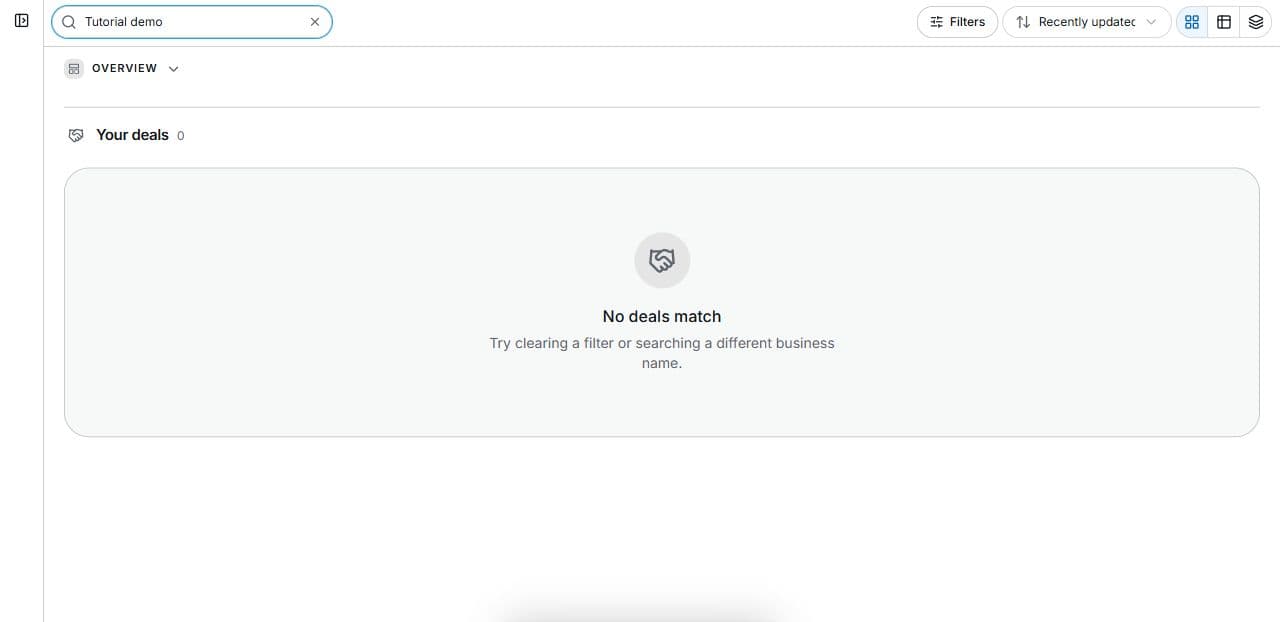
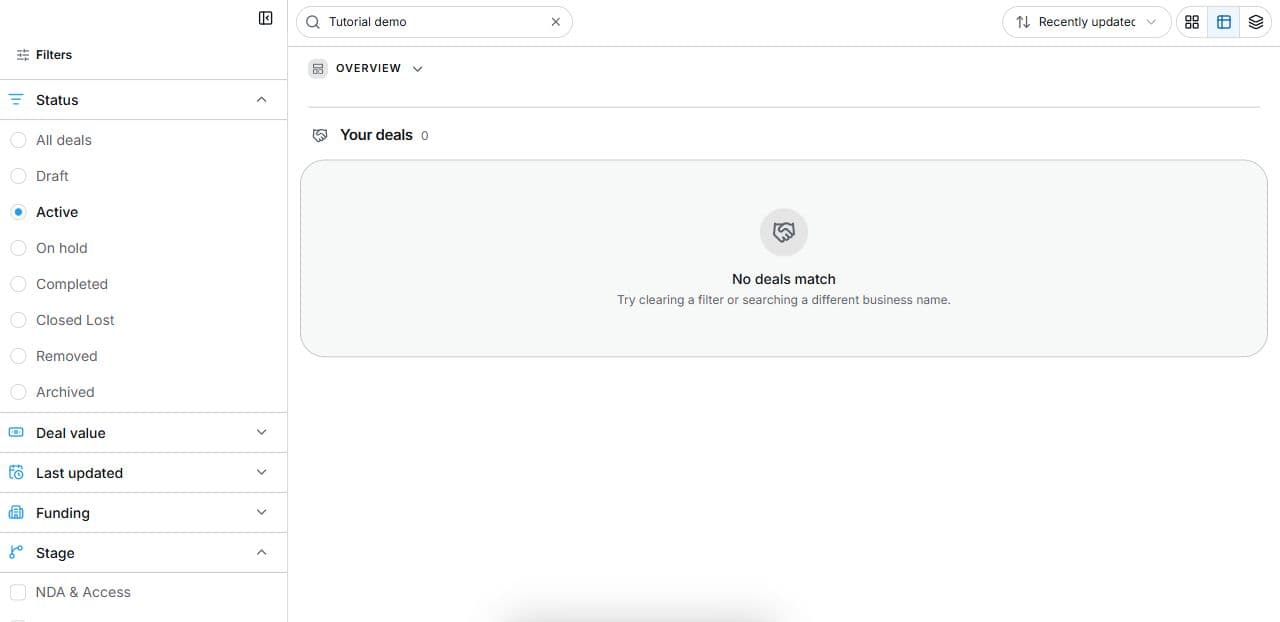
2. Find the relevant status and stage
Open Deal Room → Filters. Combine Status, Stage and Search. The empty capture excludes client records. Filters do not change transactions.
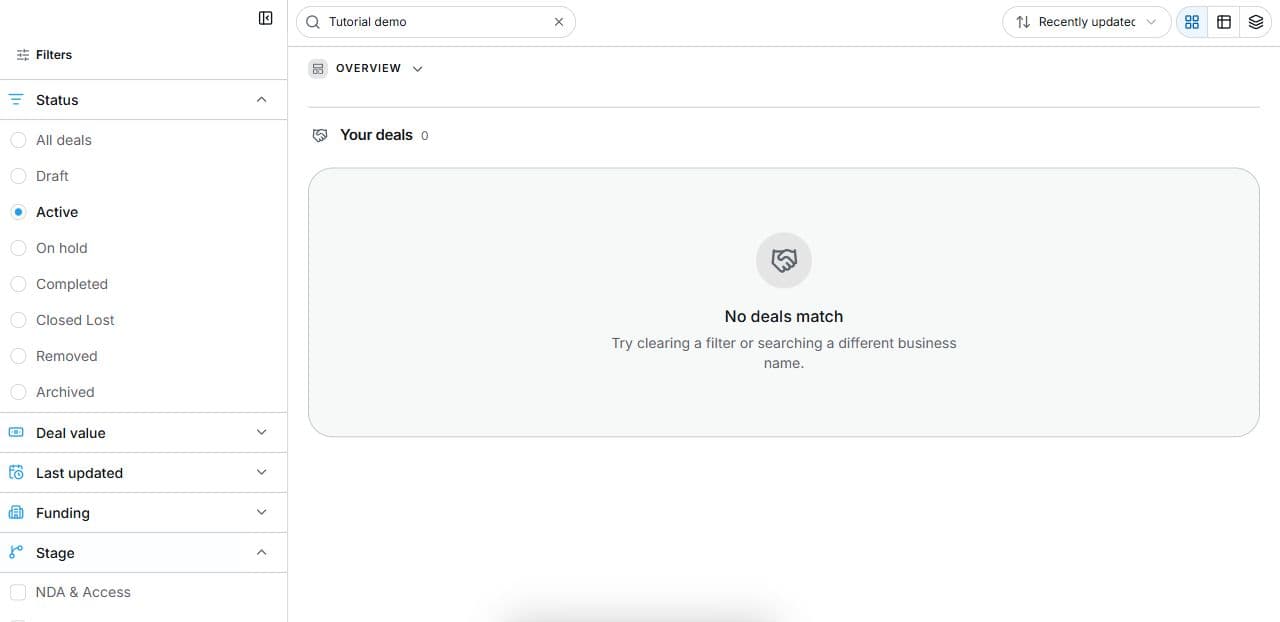
3. Open the permitted deal
Choose Open deal in a permitted result. Review Checklist, the next item, Answer questions, Create a task and Documents. Resolve prerequisite items before locked stages.
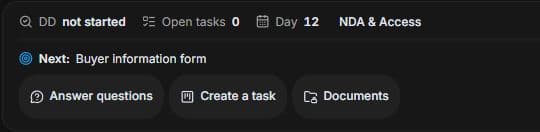
4. Plan the next evidence task
Open Tasks → Add Task. Set a precise action, Status, Assignee, Due, Priority and Owner side. Verify responsibility and permissions before saving a real task.
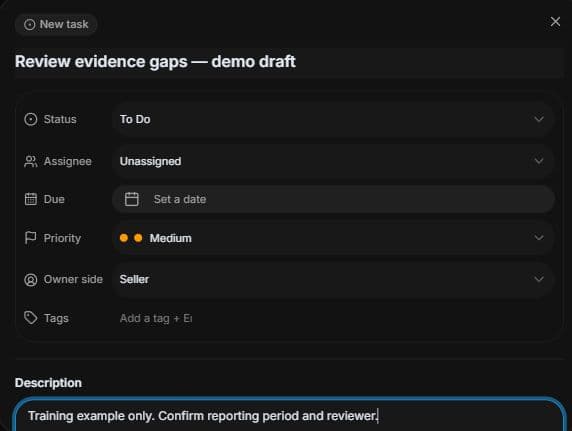
5. Review the outcome and next step
Use Table view for comparison or Group by listing for the same business’s opportunities. In each permitted deal, agree the next unfinished requirement and responsible party. Investigate delay through actual evidence, not a progress forecast. Filtering this example reassigns, advances and closes nothing; your real queue still needs individual review.
Common questions
Short answers to what people ask most about this part of the product.
Does Group by listing combine access and terms?
No. It is a view. Each deal retains its participants, permissions, stage and contractual requirements.
Which view helps compare buyers for one business?
Use Group by listing to organise related opportunities, or Table view for comparisons. Each deal still has its own participants, terms and permissions.
Why are the shown controls in English?
These real platform captures use English labels. Italian narration and instructions retain them so you can identify the exact shown controls.
Why is the next stage locked?
Read the checklist’s prerequisite message. Complete the earlier required items with the authorised responsible party before expecting later stages to unlock. Task completion alone does not confirm contractual completion.
Video transcript
You manage several listings and need to decide what needs attention today. Open Deal Room with status and stage filters instead of reading every record. It shows how to organise a queue without changing records, signing agreements or giving one buyer access to another buyer’s opportunity. Open Filters in Deal Room. Status describes the overall state; Stage identifies a transaction step such as NDA and Access, Pre LOI Review, Offer, Escrow and Funding, Due Diligence or Close. Combine these with Search to find work. A filter changes the displayed list; it does not advance, sign off or approve the deal. In a permitted result, choose Open deal and review the checklist and the next required item. The deal offers Answer questions, Create a task and Documents. Later stages can stay locked until earlier required items are complete. Use the checklist to identify the evidence and responsible side. A progress percentage is not a probability of closing. Open Tasks and Add Task, or use Create a task. Give the action a precise name and description. Review Status, Assignee, Due date, Priority and Owner side. Match the responsible side to the actual evidence requirement; the organiser’s example shows Seller. Check the permissions before saving a real task. This fictional draft was cancelled without creating a task. Use Table view for comparison or Group by listing for the same business’s opportunities. In each permitted deal, agree the next unfinished requirement and responsible party. Investigate delay through actual evidence, not a progress forecast.
Watch the video, or follow the written steps below. Both cover the same walkthrough.
Next guide